policy
3,276 rough sleepers offered route off the street as MHCLG confirms £382m allocations
Ministry of Housing figures show 3,276 people sleeping rough were offered a route off the street by the end of October, as councils and mayors receive funding allocations to the end of the Parliament.
The Ministry of Housing, Communities and Local Government (MHCLG) said 3,276 people sleeping rough had been offered at least one route off the street by the end of October, one month after the first Rough Sleeping Programme funding reached local areas on 30 September.
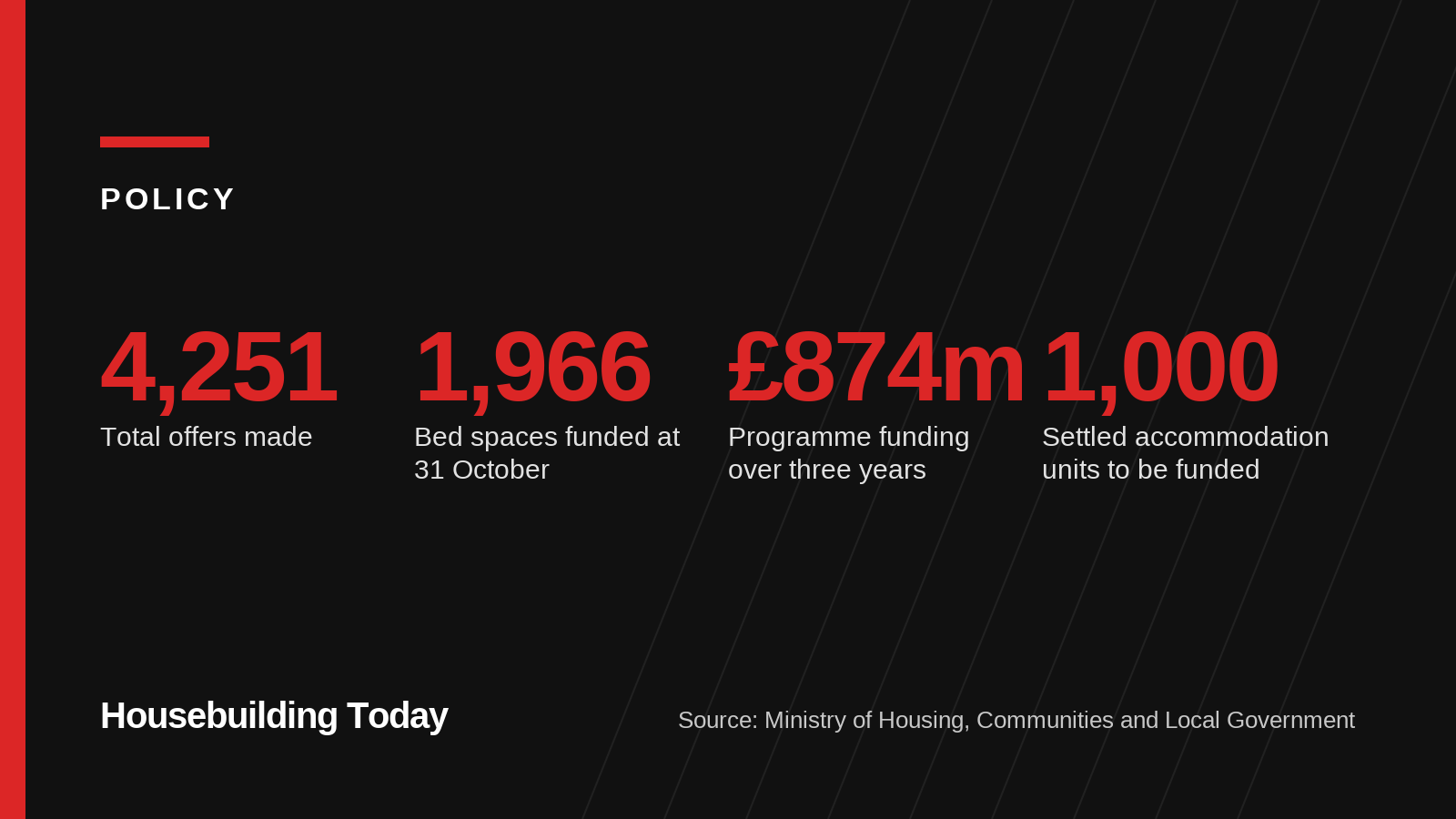
The department's management information, published on 27 November, puts the total number of offers at 4,251, a figure that includes offers to people at risk of sleeping rough and repeat offers to the same person. On 31 October, 1,966 bed spaces were reported as funded by the programme.
Alongside the figures, MHCLG confirmed allocations for councils and mayors from £382m of the extra £432m announced at the Budget, and set out settled accommodation allocations for the next two years that it said would fund more than 1,000 longer-term settled accommodation units with intensive support.
Prime Minister Andy Burnham said: "My first instruction to government was to make sure everyone sleeping rough is offered a route off the street by Christmas. Today's figures show early progress."
The figures
MHCLG said around 90% of funded areas provided data on offers and bed spaces, and around 78% gave their level of delivery confidence. Of those, 82% said they were confident they would be able to offer everyone sleeping rough in their area a route off the street by 1 December.
The department defines an offer as support or accommodation made to a person sleeping rough or at risk of sleeping rough. In an explainer published the same day, MHCLG said an offer could include accommodation or support that gives someone a clear and accessible route away from the street.
The press release also cited 656 offers made in the East of England and 253 newly funded bed spaces in the North West.
MHCLG cautioned that the statistics are management information submitted by funded authorities and remain subject to validation and quality assurance. It said national or regional programme totals should not be read as representing all rough sleeping support or accommodation activity in an area, and described the October figures as the start of the programme rather than an assessment of its final impact.
The funding
The Rough Sleeping Programme is backed by £874m over three years and is led by Mayoral Strategic Authorities and local authorities, according to MHCLG. Year 1 funds were released on 30 September 2026.
The initial funding was £442m. On 25 October 2026, at the first Rough Sleeping Summit at Downing Street, the Prime Minister announced a further £432m, taking the total to £874m and extending support beyond March 2027 to the end of this Parliament. At the summit, the National Housing Federation committed to identify at least 2,000 potential homes and bed spaces, including empty properties that could be brought back into use.
On 27 November MHCLG updated the programme guidance and allocations table for Years 2 and 3. The updated guidance says the settled accommodation strand is to deliver additional settled homes for people experiencing long-term rough sleeping, building on Housing First principles. Revenue funding for 2027/28 will be paid alongside the Homelessness, Rough Sleeping and Domestic Abuse Grant in monthly instalments.
The department said the confirmed allocations give councils and mayors greater certainty over the funding available to them until the end of the Parliament.
Secretary of State for Housing Angela Rayner said: "It's not just about more bed spaces, but making sure people have the support they need to rebuild their lives."
The scale of the problem
The programme follows MHCLG's autumn 2025 snapshot, which estimated 4,793 people sleeping rough in England on a single night. The department said this was a record high, exceeding the previous peak of 4,751 in 2017. London accounted for 1,277 of those counted, and the North West recorded the largest regional increase, rising from 367 in 2024 to 441 in 2025.
What happens next
MHCLG said the pledge is that everyone sleeping rough should have the offer of a route off the streets before Christmas. It acknowledged that not everyone will accept the first offer they receive, and said outreach teams would keep working with people into the new year, building trust and making further offers of support.
Data covering December will be published in the new year, the department said.
On the record: Ministry of Housing, Communities and Local Government
Sources
- Ministry of Housing, Communities and Local Government (GOV.UK) (opens in a new tab) (accessed 2026-11-27)
- Ministry of Housing, Communities and Local Government (GOV.UK) (opens in a new tab) (accessed 2026-11-27)
- Ministry of Housing, Communities and Local Government (GOV.UK) (opens in a new tab) (accessed 2026-11-27)
- Ministry of Housing, Communities and Local Government (GOV.UK) (opens in a new tab) (accessed 2026-11-27)
- Prime Minister's Office, 10 Downing Street (GOV.UK) (opens in a new tab) (accessed 2026-11-27)
- Ministry of Housing, Communities and Local Government (MHCLG in the Media blog) (opens in a new tab) (accessed 2026-11-27)
- Ministry of Housing, Communities and Local Government (GOV.UK) (opens in a new tab) (accessed 2026-11-27)
This story was researched from the primary sources above and checked against them before publication. Spotted an error? Tell us and we will correct it promptly.