policy
G15 backs draft London Plan but calls for grant and earlier Section 106 role
The group of London's largest housing associations has welcomed the Mayor's draft London Plan while pressing the GLA on grant funding, viability, Section 106 delivery and infrastructure commitments.
The G15 group of London housing associations has responded to the Mayor of London's draft London Plan consultation, backing its stronger focus on housing delivery while pressing the Greater London Authority (GLA) on grant, viability and Section 106 delivery.
G15 said the new plan was an opportunity to tackle some of the barriers holding back housing delivery in the capital, and called for a practical planning framework that would help deliver more social and affordable homes.
"We particularly welcome the Mayor's efforts to simplify planning policy, reduce duplication and provide greater certainty for housing providers and local authorities," the group said in its response.
G15 said London urgently needed more homes, particularly for social rent, and supported the plan's ambition to increase supply and make better use of brownfield land.
The group's asks
The group set out a series of priorities for the final plan. On tenure, it said the plan should also recognise the need for larger family homes, accessible housing and supported accommodation, and that sufficient grant funding would be essential, particularly where the cost of delivering those homes is higher.
On viability, G15 said housing associations faced significant financial pressures from rising construction and borrowing costs, alongside substantial investment in existing residents' homes. It asked the GLA to assess how the plan's requirements on affordable housing, design, safety, sustainability and infrastructure work together, so that developments can proceed while maintaining standards.
On Section 106, which the group described as an important source of affordable housing in London, G15 called for housing associations to be brought into the planning process earlier.
"We are calling for housing associations to be involved earlier in the planning process, while decisions about design, tenure and management arrangements can still be influenced," the group said. It said this would help ensure affordable homes were suitable for residents and could be acquired and managed by social landlords.
Long-term costs and infrastructure
G15 said that, as charitable landlords, its members' responsibility for homes continued long after construction, so planning decisions needed to consider future maintenance, energy costs, accessibility and service charges from the outset.
It also wants clearer commitments on how infrastructure will be funded and delivered, particularly on large regeneration schemes where new homes may be built over several years.
On the planning system itself, the group said a simpler London Plan should mean more predictable decisions across boroughs, and called for clearer guidance, less duplication and better support for local planning teams to reduce delays and costs.
G15 described the draft plan as a welcome step forward, provided it was backed by sufficient investment, consistent implementation and a clear focus on residents' long-term needs.
Background
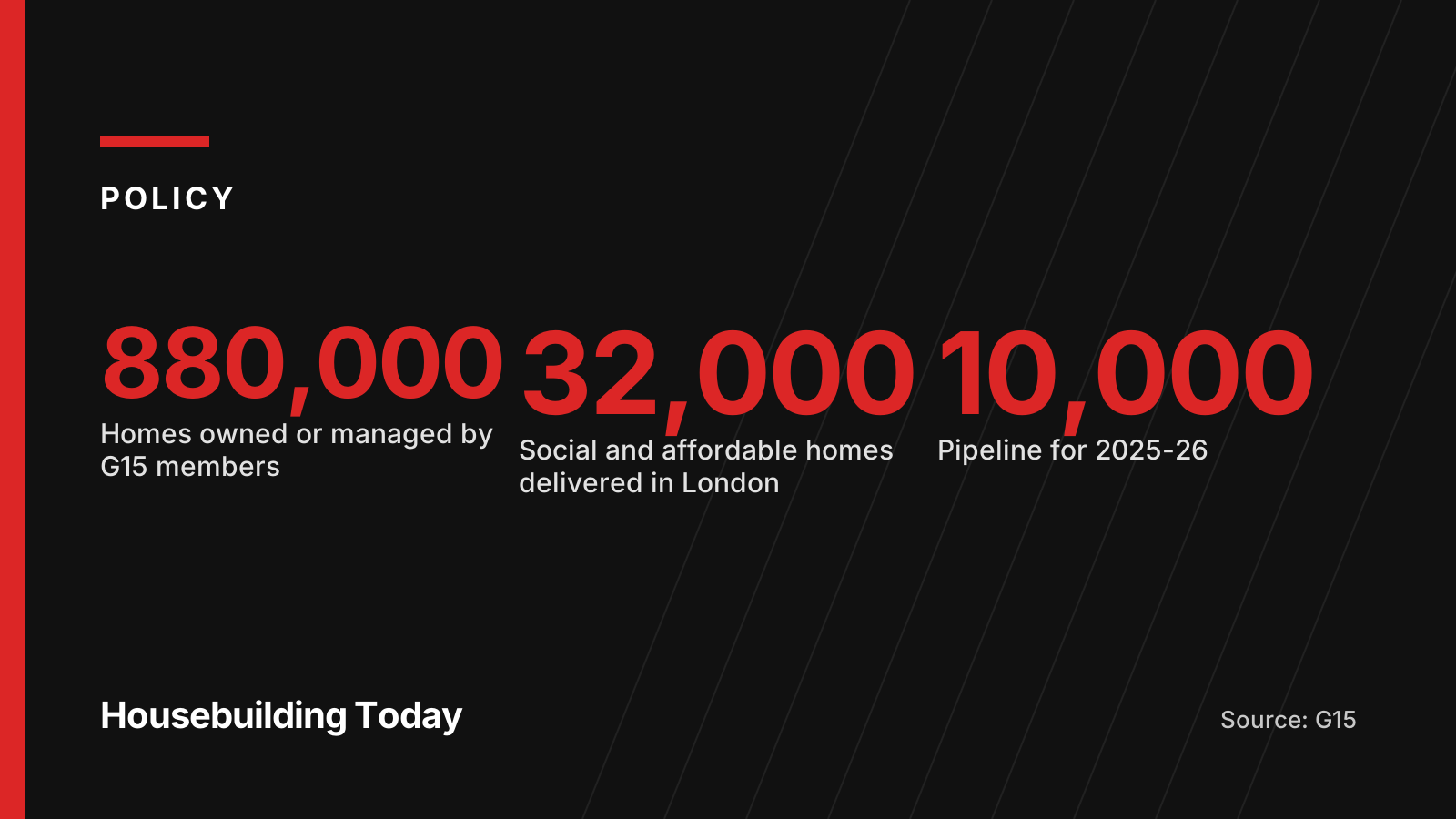
According to G15, its members own or manage more than 880,000 homes across the country. The group is led collectively by the chief executives of its member organisations.
G15 says its members have funded and delivered more than 32,000 new social and affordable homes in London in recent years, with a further 10,000 in the pipeline for 2025-26.
Sources
- G15 (opens in a new tab) (accessed 2026-10-16)
- G15 (opens in a new tab) (accessed 2026-10-16)
This story was researched from the primary sources above and checked against them before publication. Spotted an error? Tell us and we will correct it promptly.