policy
HBF calls for national highway adoption rules as average road bond reaches £338,000
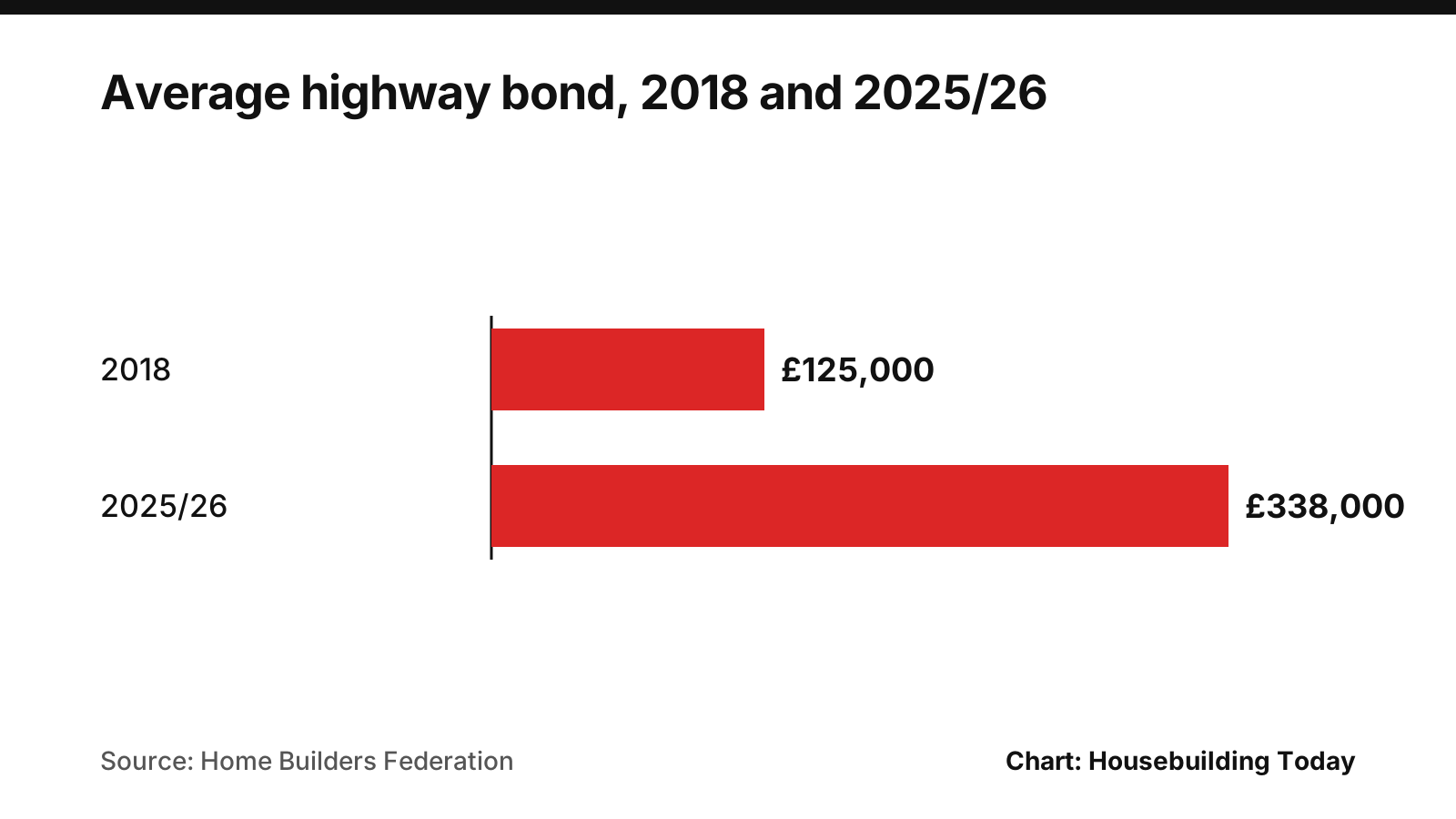
Freedom of Information research by the trade body found average highway bonds have risen from about £125,000 in 2018 to £338,000 in 2025/26, with wide variation in fees and timescales between highway authorities.
The Home Builders Federation has called for a national approach to highway adoption after its research found new estate roads took just over four years on average, and up to 12 years, to be adopted.
The trade body said the figures came from a Freedom of Information exercise of local highway authorities. They relate to Section 38 agreements, which cover new housing estate roads, measured from submission to adoption.
Section 278 agreements, which allow developers to make changes to existing roads, can take up to a year to be approved and a further two years from approval to completion, HBF said.
Neil Jefferson, chief executive at the Home Builders Federation, said: "Planning reform is an important first step, but if sites then face soaring highway costs, unpredictable requirements and years-long delays, their viability can quickly be undermined."
The figures
A highway bond is the financial guarantee councils require from house builders to ensure new roads are built to the required standard. HBF said the average bond has risen almost 170% since 2018.
| Year | Average highway bond |
|---|---|
| 2018 | About £125,000 |
| 2025/26 | £338,000 |
Individual bonds in 2025/26 ranged from £15,400 to £1.4m, according to HBF. Bonds averaged more than £7,000 per home, and ranged from £110 to £20,000 per home between authorities.
Inspection fees, which local authorities charge to inspect a road before agreeing to adopt it, ranged from about 3% to 20% of the bond value.
HBF said different authorities apply different standards, fees, bond requirements and timescales, which makes the cost and timing of a development harder to predict when assessing viability. It said this is particularly hard on small and medium-sized builders, which have less capacity to absorb unexpected costs and delays.
The federation also said that taxes and policy requirements have added on average £76,000 to the cost of delivering each new home.
Where roads and other amenities are not adopted, HBF said, residents can face estate management charges on top of council tax.
What HBF wants
HBF is urging the government to set common adoptable standards, nationally consistent bond and inspection fee requirements, statutory timescales for Section 278 and Section 38 agreements, and national standards for commuted sums.
It is also calling for more resources for local highway authority teams, and for mandatory adoption of existing unadopted highways by statutory highway authorities in England and Wales through a transfer-of-assets mechanism.
The federation wants a council tax reduction for residents of new estates with unadopted roads and amenities.
Its report, Slow Lane to Adoption, recommends that inspection fees be a fixed percentage of total bond value, set nationally, and that bond values be set on a sliding scale based on a nationally agreed average development size.
Jefferson said: "Government must address these wider barriers to delivery and create a consistent, transparent highway adoption process, so that planning permissions can translate into the homes the country needs."
Policy background
The research is a repeat exercise. An earlier round of HBF's research covered the 2022-2023 financial year.
HBF said it supports the recommendations of the Competition and Markets Authority's (CMA) housebuilding market study. The CMA recommended that the UK, Scottish and Welsh governments each implement common adoptable standards for public amenities on new housing estates, and mandatory adoption of those amenities outside minor, well-defined exceptions.
In its response to the study, published on 22 October 2024, the government said the adoption proposals were "far reaching in their implications, with impacts on the supply of new homes and local authority budgets", and did not commit to specific reforms ahead of consultation.
The Ministry of Housing, Communities and Local Government then ran a 12-week consultation on reducing private estate management arrangements. The consultation document said there may be as many as 1.75 million homes on privately managed estates in England.
The consultation ran from 18 December 2025 to 12 March 2026.
Sources
- Home Builders Federation (opens in a new tab) (accessed 2026-10-03)
- Home Builders Federation (opens in a new tab) (accessed 2026-10-03)
- Home Builders Federation (opens in a new tab) (accessed 2026-10-03)
- Ministry of Housing, Communities and Local Government (GOV.UK) (opens in a new tab) (accessed 2026-10-03)
- Ministry of Housing, Communities and Local Government (GOV.UK) (opens in a new tab) (accessed 2026-10-03)
This story was researched from the primary sources above and checked against them before publication. Spotted an error? Tell us and we will correct it promptly.