policy
Right to Buy reforms extended to housing association tenants, MHCLG factsheet confirms
A government factsheet sets out how the Social Housing Bill's 10-year qualifying period and 35-year new-build exemption will apply to the Preserved Right to Buy and the Right to Acquire, and when the measures take effect.
The Ministry of Housing, Communities and Local Government (MHCLG) has confirmed that the Social Housing Bill's reforms to the Right to Buy will also apply to housing association tenants through the Preserved Right to Buy and the Right to Acquire.
A factsheet published by the department on 3 November 2026 sets out how the changes will work for tenants with the Preserved Right to Buy and for those with the Right to Acquire.
The government said it is reforming both schemes "to better protect much-needed social homes" while keeping a route to home ownership for long-standing tenants.
Housing Secretary Steve Reed said of the Bill: "Together, these reforms will make social housing safer, fairer and built to last."
The changes
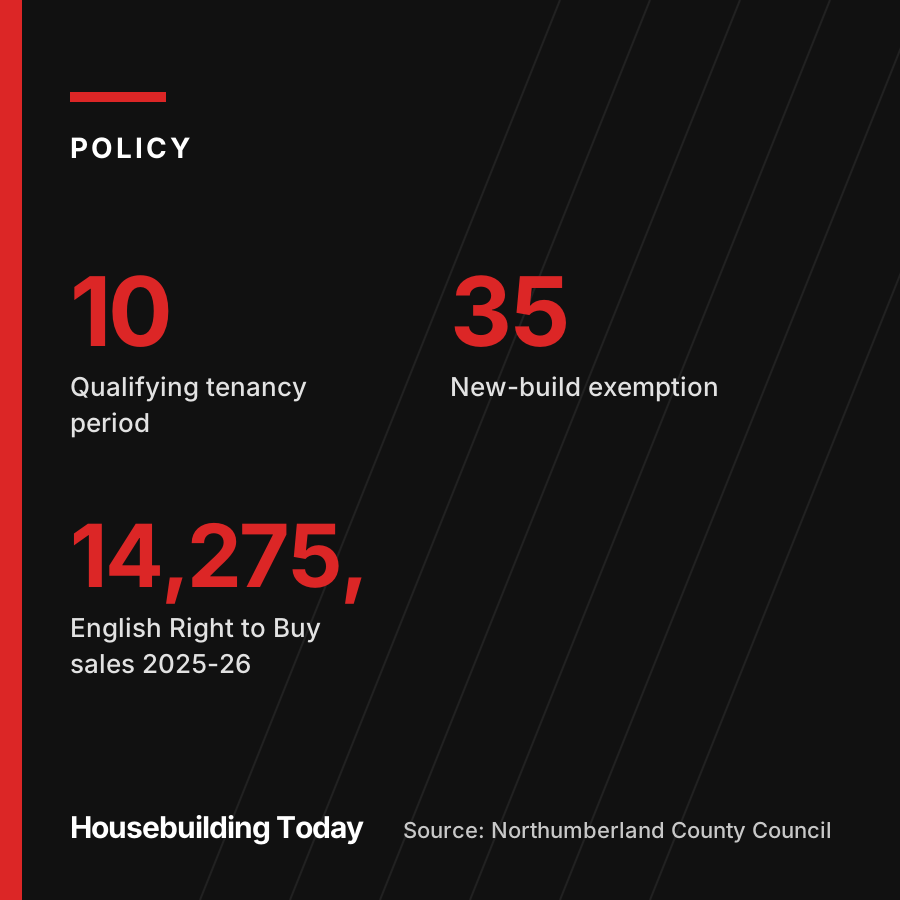
According to the factsheet, the minimum qualifying tenancy period will rise to 10 years once the Bill receives Royal Assent. The government's guide to the Bill says the current minimum for Right to Buy eligibility is three years.
Preserved Right to Buy discounts will start at 5% of a property's value at the 10-year point and rise by 1% for each further year of tenancy. They will be capped at 15% of the property's value or the cash discount cap, whichever is lower.
Right to Acquire discounts are not changing and will stay between £9,000 and £16,000, MHCLG said.
Newly built social homes will not be available to buy under either scheme until 35 years after they were built. The Preserved Right to Buy will also be removed from homes in National Parks, Areas of Outstanding Natural Beauty and designated rural areas, which the government said are particularly hard to replace because of land, planning and supply constraints.
The period in which part of a discount may have to be repaid on resale will double from five years to 10. The former landlord's right of first refusal on resale will become indefinite for sales after the reforms take effect.
Tenants who have already used the Right to Buy, Preserved Right to Buy or Right to Acquire will not be able to use the schemes again, with exceptions for domestic abuse and relationship breakdown.
Landlord processes
Landlords will be able to pause application timescales for up to six months while they investigate fraud, and the statutory period for issuing a notice confirming an application will rise from four to eight weeks.
The factsheet says the measures are not yet in force. Tenants who want an application considered under the existing rules must apply to their landlord before the Bill gains Royal Assent.
Background
The Social Housing Bill was confirmed in the King's Speech on 13 May 2026 and introduced to Parliament the following day. The government's guide to the Bill says it is intended to protect social housing stock and give affordable housing providers "the clarity and confidence they need to build more social homes".
Alongside the Right to Buy measures, the Bill exempts council homes let at market rent from the scheme and removes unimplemented requirements from the Housing and Planning Act 2016, including rules that would have forced councils to sell high-value homes.
The reforms follow a 2024-25 consultation that drew 964 responses. In its July 2025 response, the government said it intended to legislate to raise the minimum eligibility period from three to 10 years as a public sector tenant. On 28 April 2026 it confirmed it would bring forward further reforms.
Earlier changes announced by the government reduced maximum Right to Buy cash discounts to between £16,000 and £38,000 depending on the area, and extended the cost floor protection from 15 to 30 years so landlords can limit discounts to stop a sale price falling below the amount spent building, repairing and maintaining a property. Councils can also retain all receipts from sales and combine them with grant funding to build and buy more homes.
Gavin Smart, chief executive of the Chartered Institute of Housing, described the measures as a positive step towards "addressing the long-standing imbalance between homes sold and those replaced".
Sales and replacements
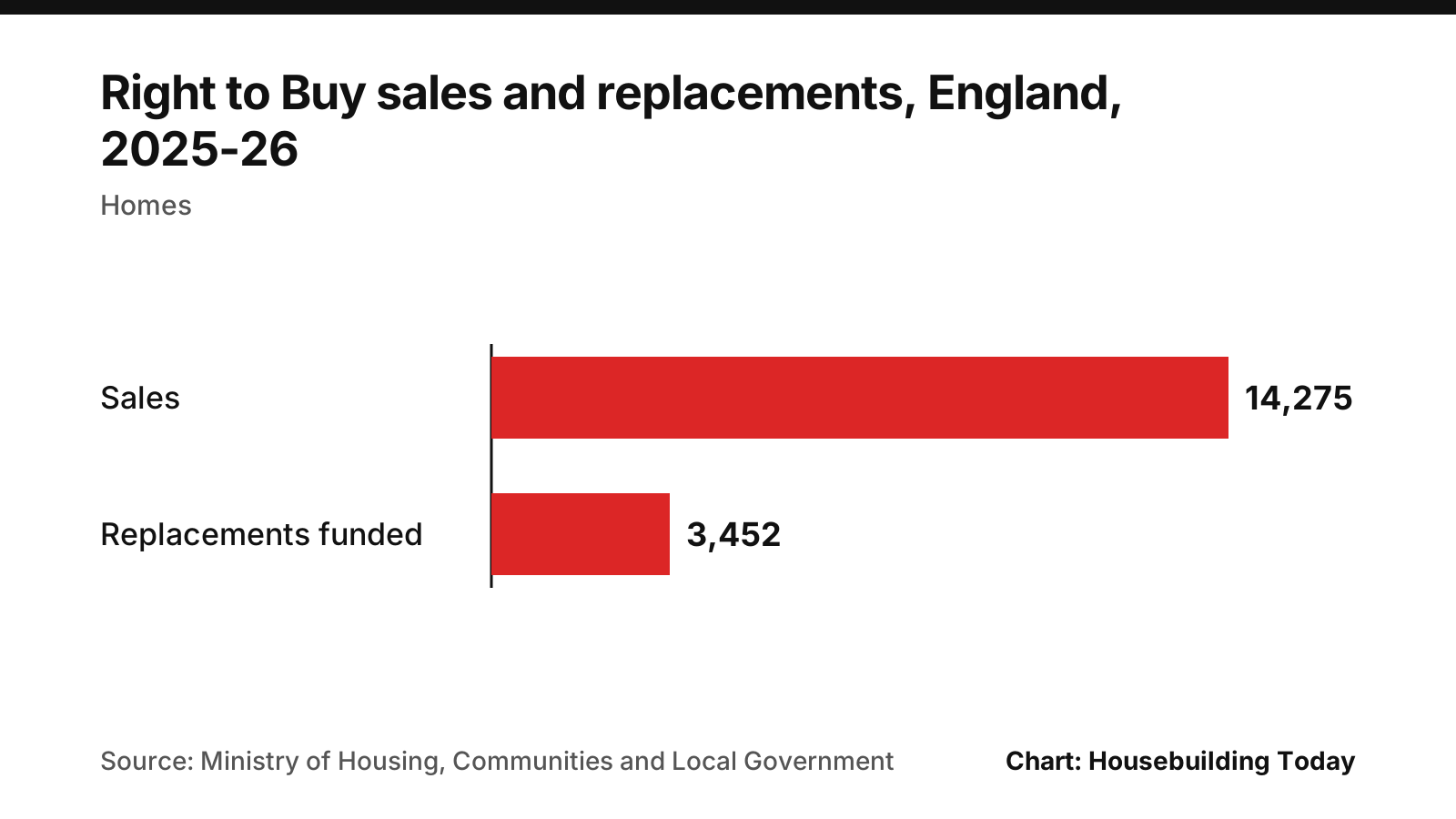
MHCLG statistics show local authorities reported 14,275 eligible Right to Buy sales in England in 2025-26, up 90% on 2024-25, generating £1.61bn in receipts. Replacements funded through those receipts fell 7% to 3,452.
| 2025-26, England | Homes |
|---|---|
| Right to Buy sales | 14,275 |
| Replacements funded from receipts | 3,452 |
The government said about 133,000 council homes were sold between 2012 and 2025 against 51,000 replacements. By 31 March 2026 there had been 2,052,813 sales to tenants through the Right to Buy since the scheme began, according to the official statistics.
On the record: Ministry of Housing, Communities and Local Government
Sources
- Ministry of Housing, Communities and Local Government (opens in a new tab) (accessed 2026-11-04)
- Ministry of Housing, Communities and Local Government (opens in a new tab) (accessed 2026-11-04)
- Ministry of Housing, Communities and Local Government (opens in a new tab) (accessed 2026-11-04)
- Ministry of Housing, Communities and Local Government (opens in a new tab) (accessed 2026-11-04)
- Ministry of Housing, Communities and Local Government (opens in a new tab) (accessed 2026-11-04)
- Ministry of Housing, Communities and Local Government (opens in a new tab) (accessed 2026-11-04)
- Ministry of Housing, Communities and Local Government (opens in a new tab) (accessed 2026-11-04)
This story was researched from the primary sources above and checked against them before publication. Spotted an error? Tell us and we will correct it promptly.