housebuilders
Sir Michael Lyons to retire as English Cities Fund chair after more than 25 years
The regeneration partnership's founding chair will step down at the end of January 2027, leaving a £400m fund targeting about 17,000 further homes by 2036 and a successor still to be named.
Sir Michael Lyons will retire as chair of the English Cities Fund (ECF) at the end of January 2027, development partner Muse announced on 6 October, after more than 25 years leading the regeneration partnership since its creation.
ECF brings together Homes England's National Housing Bank, L&G and Muse, and works alongside local and combined authorities on housing-led regeneration. Sir Michael will remain in post until the end of January, and Muse said his successor would be announced in due course.
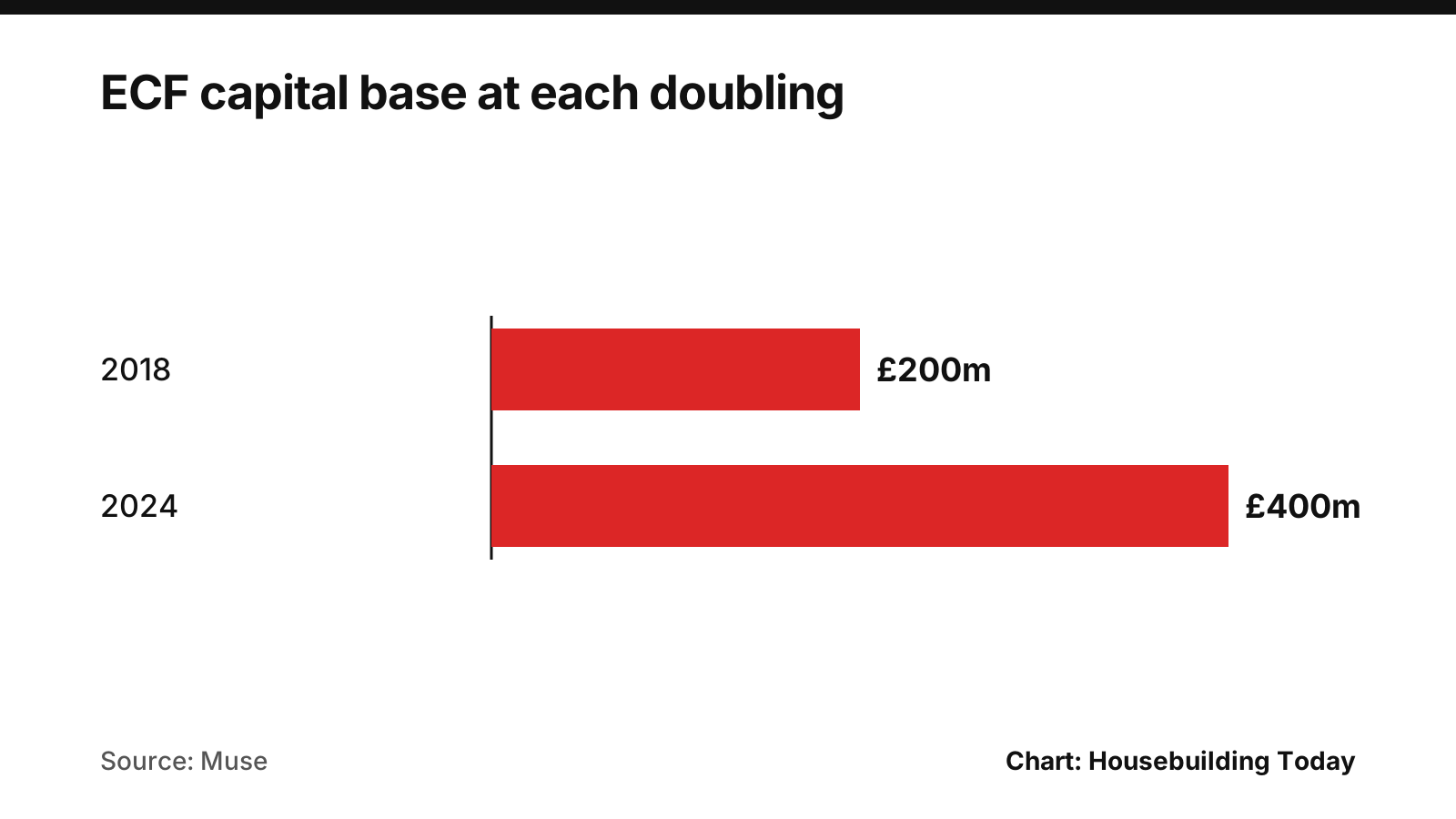
Under his chairmanship the partnership's capital base doubled twice, to £200m in 2018 and £400m in 2024, according to Muse. That capital is now behind a pipeline targeting about 17,000 more homes and a further one million sq ft of commercial space by 2036, in places including London, Wolverhampton, Hull, St Helens and Bradford.
Sir Michael Lyons, chair of ECF, said: "At a time when many public-private partnerships were being swept away, ECF survived because we were determined that there should be a return on the public investment."
The record so far
The partnership dates from the early 2000s. Homes England has said ECF's first investment was in Liverpool in 2001, while Muse's announcement puts its establishment at 2002.
In February 2024, when Homes England announced the recapitalisation to £400m, it said ECF had completed five mixed-use regeneration projects worth £1.2bn in Liverpool, London, Plymouth, Salford and Wakefield. By then the partnership had delivered 2,150 homes and 1,150,000 sq ft of office, retail and leisure space, the agency said. ECF's own website now puts the jobs created at more than 8,400.
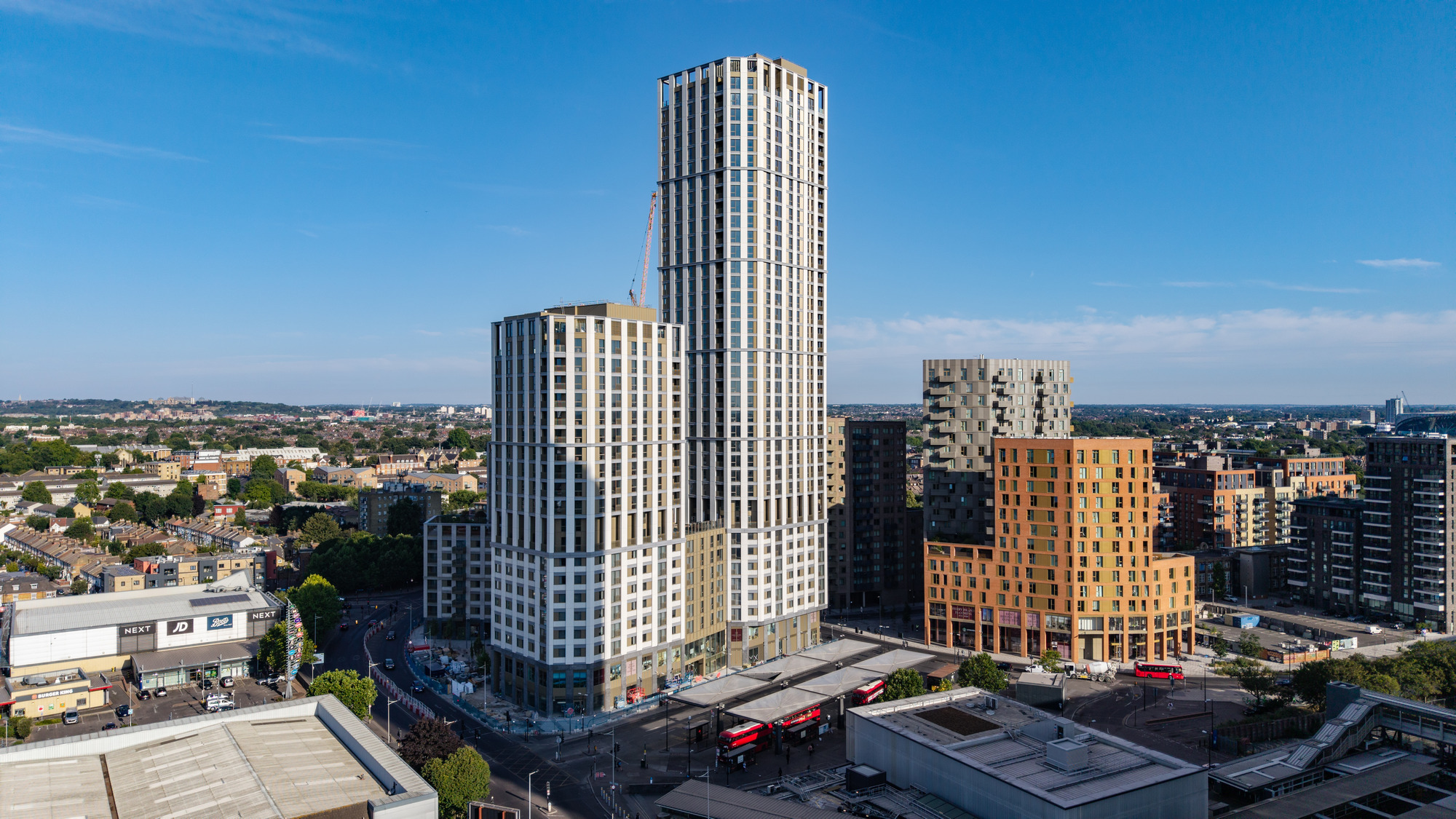
Salford Central is one of those projects. Muse describes it as a £1bn, two-decade programme delivered in partnership with Salford City Council, with more than 1,000 mixed-tenure homes and 770,000 sq ft of commercial space. ECF's project page says the final phase in the Chapel Street area, Greenhaus, delivered 96 affordable Passivhaus-standard homes.
| Capital base | £m |
|---|---|
| 2018 | 200 |
| 2024 | 400 |
How the fund grew
The 2024 doubling came from an extra £100m of equity from the partners, matched by a further £100m of debt, Homes England said at the time. At that point the agency set out the 2036 target of 17,000 homes and more than 1m sq ft of commercial space, which it said would support education alongside social infrastructure for health and wellbeing.
That followed a March 2022 decision by Homes England, L&G and Muse to recommit to ECF for a further ten years to December 2036. The partnership was then a £200m joint venture targeting 6,600 homes and 2m sq ft of commercial space, beginning with St Helens and Salford Crescent, according to Homes England.
Sir Michael said in 2024 that ECF always takes a long-term view and shares risks and rewards with local partners where possible.
Muse's announcement names Homes England's National Housing Bank as one of ECF's three partners. The bank is a subsidiary of Homes England headquartered in Leeds. Homes England said it can deploy up to £16bn of debt, equity and guarantees and is expected to support delivery of more than 500,000 homes.
Beyond ECF
Pat Ritchie CBE, chair of Homes England, said: "Sir Michael's leadership, experience and commitment to long-term investment in regeneration have been central to ECF's success in creating thousands of new homes and thriving places from Wakefield to Plymouth."
Sir Michael was chief executive of Wolverhampton Borough Council, Nottinghamshire County Council and Birmingham City Council, and was knighted for services to local government in 2000. He chaired the BBC from 2007 to 2011 and led the Lyons Housing Review in 2013/14.
Most recently he chaired the government's New Towns Taskforce. When its report was published on 28 September 2025, the Ministry of Housing, Communities and Local Government said the government welcomed all 12 recommended locations. The Taskforce estimated those sites could contribute at least 300,000 homes, and said each new town should have at least 10,000 homes with an ambition of at least 40% affordable housing. The government said it aims to start building in at least three new towns in this Parliament.
Phil Mayall, managing director at Muse, said Sir Michael had influenced how housing delivery and placemaking is approached across the country. Tom Roberts, head of investment and development at L&G, described him as the driving force behind some of the country's most significant regeneration projects of recent decades.
Sir Michael's successor will inherit a partnership committed to December 2036 and a target of about 17,000 further homes.
On the record: Homes England
Sources
- Muse (opens in a new tab) (accessed 2026-10-07)
- Homes England (GOV.UK) (opens in a new tab) (accessed 2026-10-07)
- Homes England (GOV.UK) (opens in a new tab) (accessed 2026-10-07)
- Homes England (GOV.UK) (opens in a new tab) (accessed 2026-10-07)
- Ministry of Housing, Communities and Local Government (GOV.UK) (opens in a new tab) (accessed 2026-10-07)
- New Towns Taskforce / MHCLG (GOV.UK) (opens in a new tab) (accessed 2026-10-07)
- English Cities Fund (ECF) (opens in a new tab) (accessed 2026-10-07)
- English Cities Fund (ECF) (opens in a new tab) (accessed 2026-10-07)
This story was researched from the primary sources above and checked against them before publication. Spotted an error? Tell us and we will correct it promptly.