policy
Budget confirms £4.7bn Your First Home equity loan scheme with sales from April 2027
The Chancellor has set out funding, deposit limits, price caps and a tiered developer fee for the new-build equity loan scheme, with housebuilder registration expected to open in December.
The Chancellor confirmed £4.7bn of funding over five years at the Budget on 28 October for Your First Home, an equity loan scheme for first-time buyers of qualifying new-build homes in England, the Home Builders Federation (HBF) said.
According to the government's guide to the scheme, published by the Ministry of Housing, Communities and Local Government (MHCLG), £700m is allocated in 2027-28 and £1bn in each of the following years.
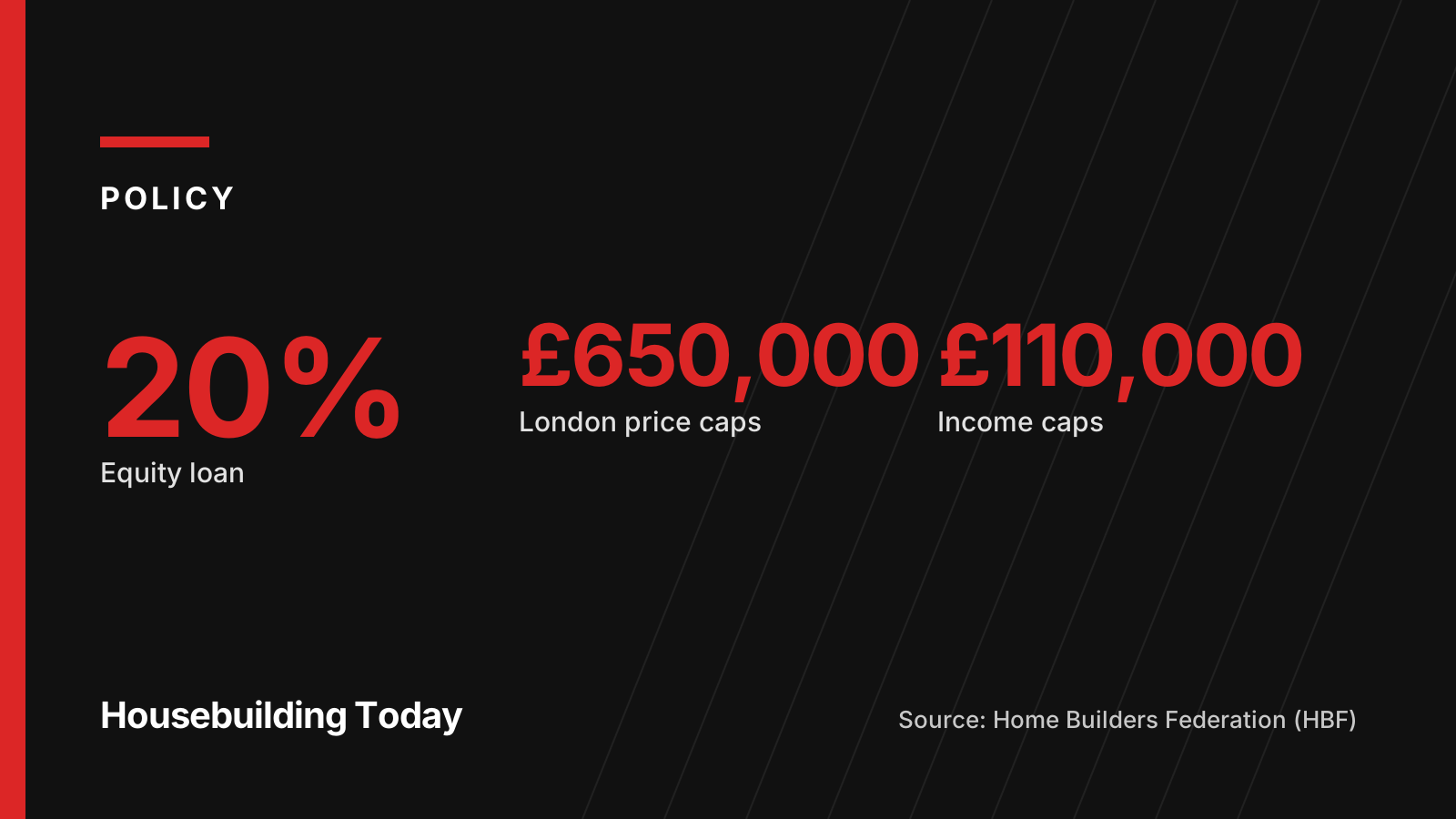
HBF said qualifying buyers will be able to take an equity loan of up to 20% of the property's value, with a minimum deposit of 2.5% and a maximum deposit of 15%. In its briefing to members, HBF said the loan would be interest free for five years, with interest charged at 1.5% from year six and rising to 3% thereafter.
Neil Jefferson, chief executive of the Home Builders Federation, said: "We welcome the Your First Home scheme to support first-time buyers of new-build homes." He added that "a lack of effective demand has been one of the major barriers to increasing housing supply".
Timetable
HBF said home builder registration is expected to open in December, with buyer reservations from February 2027 and completions possible from April 2027. The government's own timeline gives customer pre-registration and guidance by the end of December 2026, first customer applications in February 2027 and first property sales in April 2027.
Noting the potential effect on the market in the intervening period, HBF said it continues to urge the government to bring the scheme forward and to accelerate timescales where possible.
Price and income caps
Price caps will be set at local authority level, HBF said, linked to median new-build first-time buyer purchase prices over the past five years, uprated to today's prices, with a further 10% added to protect the caps against house price inflation over the scheme's five-year life.
HBF said MHCLG is constructing the local caps from UK Finance data on new-build mortgages because official data on new-build first-time buyer transactions is lacking. London will be covered by two cap areas, with Inner London set at £650,000 and Outer London at £500,000. The government said a full list of caps by local authority area will be published shortly.
Household income caps are £110,000 for purchases outside London and £140,000 for buyers in the capital, according to HBF.
Developer fees
HBF described the developer fee charged on each transaction as a key difference from Help to Buy. Its briefing said fees rise with the volume a builder puts through the scheme, resetting annually: 1% of sales price on transactions one to 100, 3% on transactions 101 to 250 and 4% from transaction 251 onwards. HBF cited the government's worked example of a developer selling 500 homes a year through the scheme, which would pay an average fee of 3.1%.
HBF said it had pressed for fees to be set at a level that lets small and medium-sized builders take part, as they did under Help to Buy, and had pushed against significant fees on larger builders.
In September, MHCLG said developers would be expected to make a contribution when signing up to help cover the scheme's costs.
How the loan works
The government's guide gives a worked example for a £300,000 home: a £7,500 deposit, a £60,000 equity loan and a £232,500 repayment mortgage. It said a standard 95% mortgage on the same home would typically need a £15,000 deposit.
The loan is linked to the home's value, so a borrower will normally repay 20% of the property's value at the time of repayment rather than the sum originally borrowed. The government said it will not be a joint owner or landlord, and the buyer owns the home from completion.
Supply forecast
HBF said the Office for Budget Responsibility (OBR) forecasts only a marginal impact on supply from the scheme because of its limited overall size. HBF's briefing said the OBR had downgraded its overall housing supply forecast and had highlighted the effect of the Building Safety Levy, Biodiversity Net Gain, the Residential Property Developer Tax and nutrient mitigation costs on housebuilding activity.
In its Budget response, HBF noted the OBR expects net additions to the housing stock to fall to about 230,000 in 2025/26 across the UK. HBF also said the Budget exempts brownfield sites of up to 1.5 hectares from Biodiversity Net Gain requirements.
The Budget document from HM Treasury also provides an additional £1.5bn to deliver around 10,000 homes in England through the Social and Affordable Homes Programme.
MHCLG first announced on 26 September 2026 that the scheme would be confirmed at the Budget, saying it would act as a stimulus to support the market and boost housing supply. Jefferson said at the time that HBF welcomed the announcement and its recognition of the challenges facing first-time buyers, and that the government should move quickly to implement the scheme.
The full list of local authority price caps outside London is due to be published in the coming days, HBF said.
On the record: Home Builders Federation, Ministry of Housing, Communities and Local Government
Sources
- Home Builders Federation (opens in a new tab) (accessed 2026-10-29)
- Ministry of Housing, Communities and Local Government (GOV.UK) (opens in a new tab) (accessed 2026-10-29)
- HM Treasury (GOV.UK) (opens in a new tab) (accessed 2026-10-29)
- Ministry of Housing, Communities and Local Government (GOV.UK) (opens in a new tab) (accessed 2026-10-29)
- Home Builders Federation (opens in a new tab) (accessed 2026-10-29)
- Home Builders Federation (opens in a new tab) (accessed 2026-10-29)
This story was researched from the primary sources above and checked against them before publication. Spotted an error? Tell us and we will correct it promptly.