policy
Northern Housing Consortium seeks Budget funding to back new mayoral planning powers
The body representing northern councils and housing associations backs the direction of the government's proposals but wants flexible thresholds, a regeneration category, capacity funding and a change to how levy receipts can be spent.
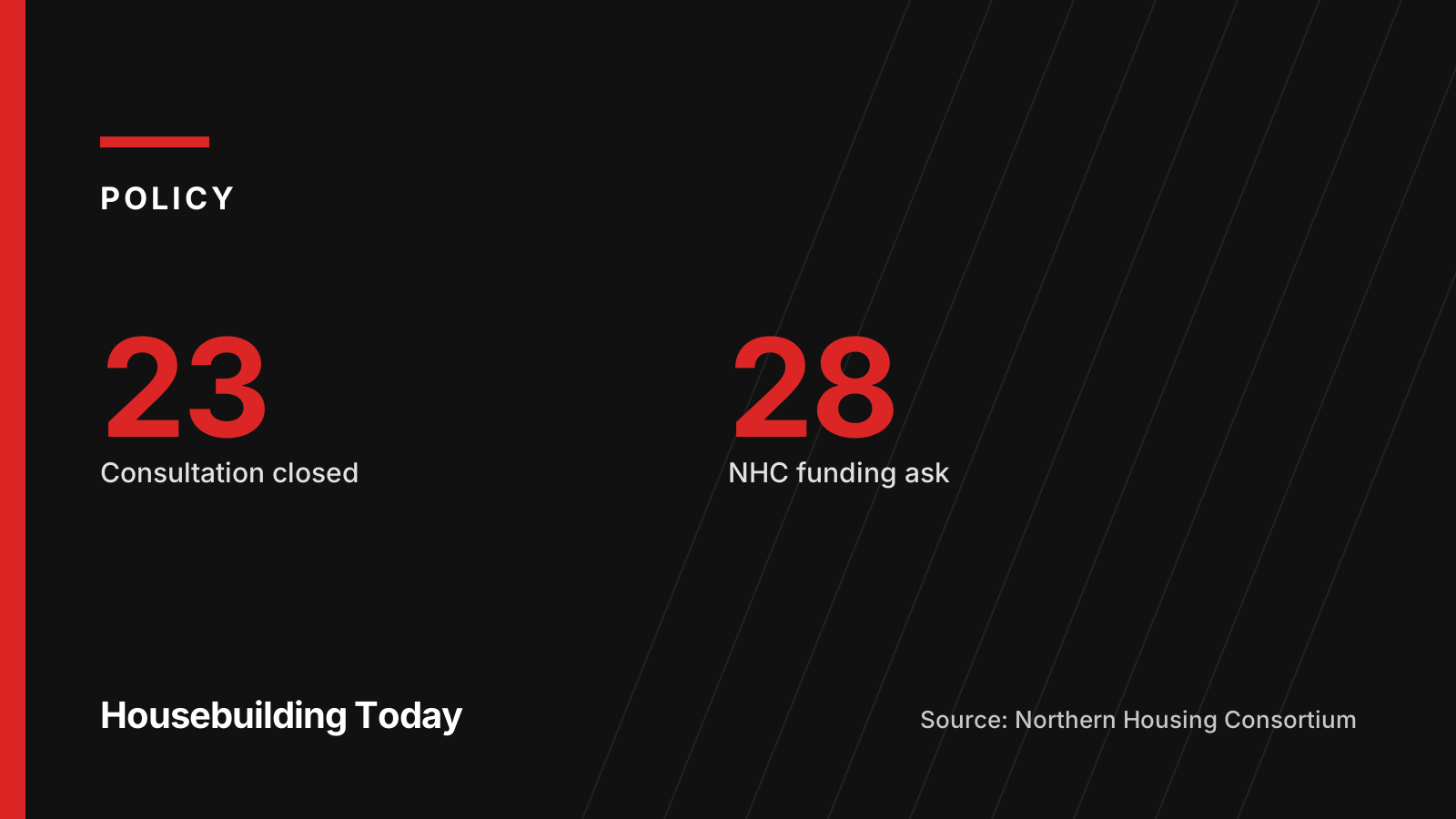
The Northern Housing Consortium has asked the government to provide extra capacity funding at the Autumn Budget on 28 October in its response to the consultation on new planning powers for mayoral strategic authorities in England.
The consortium, a not-for-profit membership body whose members own or manage nine out of 10 socially rented homes in the North, said it supported the broad direction of the proposals but set out several issues it wants addressed before the powers take effect.
The Ministry of Housing, Communities and Local Government (MHCLG) ran the consultation for six weeks, closing at 23:59 on 5 October 2026. The powers are being introduced under the English Devolution and Community Empowerment Act 2026. The NHC's post said mayors will receive the new planning powers from "early 2027".
Matthew Pennycook MP, Minister of State for Housing and Planning, wrote in the consultation's foreword that "it is local leaders, including mayors, who should be overseeing the strategic direction of development in their areas".
The proposals
According to the NHC, the consultation proposes a range of new powers for mayors, including the ability to intervene in strategically important planning applications, make Mayoral Development Orders and set a Mayoral Community Infrastructure Levy (MCIL). MHCLG's document defines the strategic authorities covered as the Greater London Authority, combined authorities and combined county authorities.
A Mayoral Development Order is an upfront grant of planning permission by a mayor for development on a particular site, according to the consultation document.
The Secretary of State would retain a backstop power to call in an application that a mayor has already called in, and applicants would be able to appeal to the Secretary of State where a mayor refuses permission.
The NHC's position
The consortium's central argument is for flexibility. It said housing and land markets vary significantly across the North, so a single national set of thresholds may not always identify developments that are genuinely strategic in a local area. It argued that mayors should be able to tailor the thresholds to local circumstances.
It also wants regeneration recognised as a distinct category of strategic importance. In many northern communities, the consortium said, the most significant development opportunities are estate renewal, town centre regeneration and the remediation and redevelopment of brownfield land rather than large greenfield sites.
On governance, the NHC said mayors outside London work alongside constituent council leaders through combined authority structures, and that the new powers should be implemented in a way that protects that collaborative working.
Capacity and council finances
The consortium said feedback from strategic authorities suggested many areas would need additional specialist planning, development and viability expertise to use the powers effectively, which prompted its call for capacity funding at the Budget.
It also flagged the potential effect on local planning authority finances where Mayoral Development Orders could remove planning functions and the associated fee income from councils. The government, it said, has not yet clarified how it intends to address this.
The Chartered Institute of Housing (CIH) raised a similar point in its own comments on the proposals, saying devolution would only work effectively if local authorities and mayoral strategic authorities were properly resourced.
Tom Arnold, policy manager at CIH, said: "The government will need to support mayoral strategic authorities to build capacity". He added that the powers, if used properly, could help deliver more homes and infrastructure to meet local needs.
The levy
On MCIL, the NHC said it supported giving mayors greater flexibility over how any future levy is designed and used, but that it must reflect local market conditions and not undermine development viability in areas where viability is already challenging.
The consortium also asked the government to consider allowing MCIL receipts to support affordable housing delivery, which it said they currently cannot. MHCLG's consultation document describes the levy as a means of funding strategic infrastructure.
What happens next
The NHC's full response is published on its website. The consortium said it would continue working with its members, which include local authorities, housing associations, ALMOs and combined authorities, and with government as the proposals are developed.
The Budget on 28 October is the next decision point for the capacity funding the consortium has requested. MHCLG said secondary legislation would set a commencement date in early 2027 for the powers to intervene in applications of strategic importance.
On the record: Ministry of Housing, Communities and Local Government
Sources
- Northern Housing Consortium (opens in a new tab) (accessed 2026-10-17)
- Ministry of Housing, Communities and Local Government (opens in a new tab) (accessed 2026-10-17)
- Chartered Institute of Housing (opens in a new tab) (accessed 2026-10-17)
- Northern Housing Consortium (opens in a new tab) (accessed 2026-10-17)
This story was researched from the primary sources above and checked against them before publication. Spotted an error? Tell us and we will correct it promptly.