affordable housing
Peabody appoints Nathan Nagaiah as its first head of AI to target repairs and services
The housing association said the new post will look at how artificial intelligence can speed up repairs, improve customer services and spot problems earlier across its 220,000 residents.
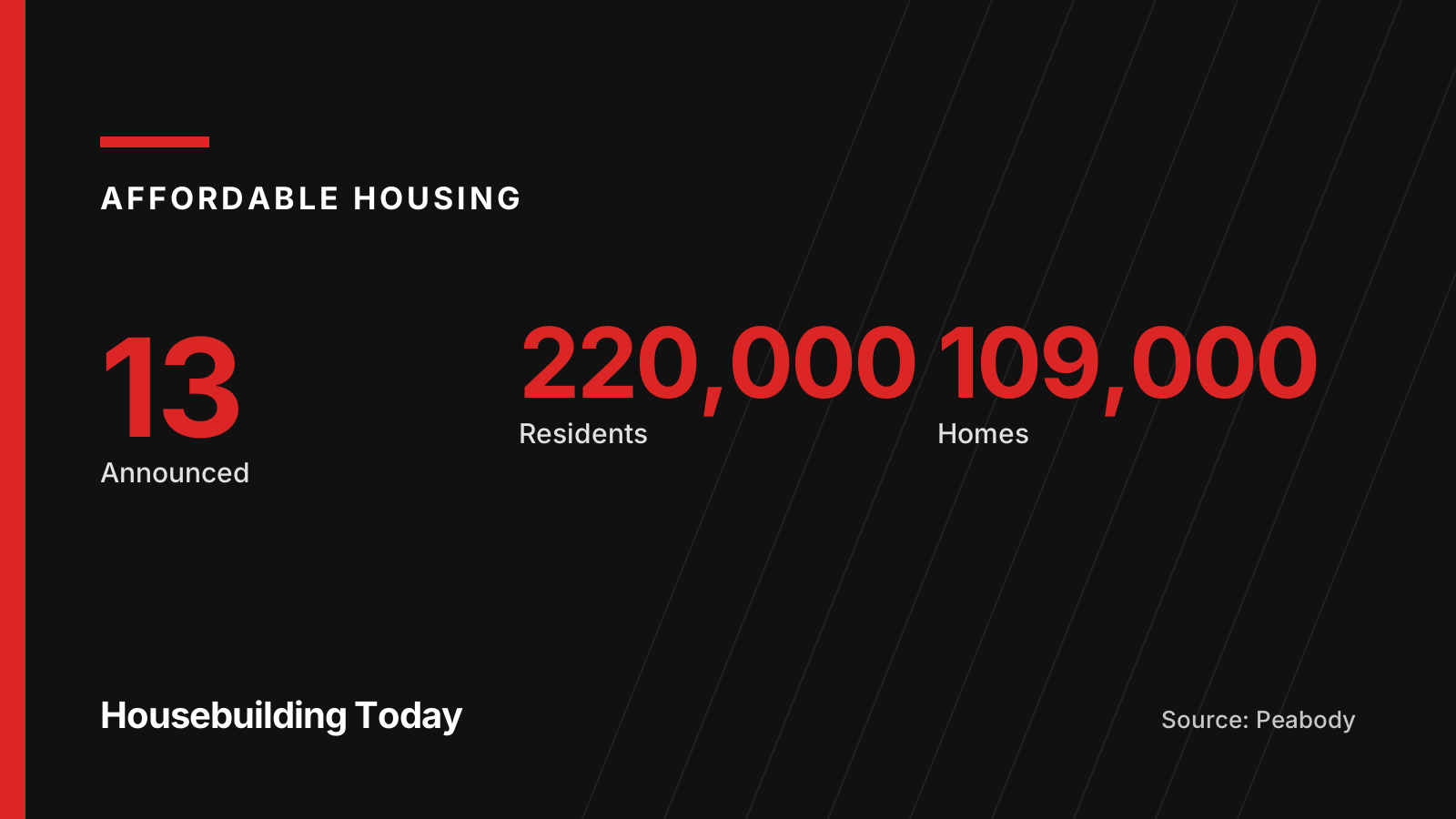
Peabody has appointed Nathan Nagaiah as its first head of artificial intelligence, the housing association said on 13 October, as it looks to use technology to improve services for its 220,000 residents.
Peabody said Nagaiah will lead its approach to AI, looking at how it can speed up repairs, improve customer services, identify problems earlier and free up staff time to support residents.
The association said its focus will be on using the technology responsibly, being open about how it is used and keeping people at the heart of decisions.
Nathan Nagaiah, head of AI at Peabody, said: "Three years from now, I don't want residents to say, 'Peabody has great AI.' I want them to say, 'Peabody understands my needs, responds faster and makes my life easier.'"
Background
According to Peabody, Nagaiah founded and led the UK Centre for AI in the Public Sector at Newham Council, set up in partnership with the University of East London. Newham Council's own page on the centre, which it calls the Centre for AI in the Public Sector, says it launched in September 2024 but does not name any individual.
At Newham he led development of DOMUS, an AI tool that Peabody said helps housing officers identify suitable temporary accommodation more quickly while staff keep the final decision.
Newham Council says the centre's aims include promoting the use of AI to improve services in areas such as temporary accommodation, and ensuring ethical and effective use of the technology through governance and compliance frameworks. Its page says a first pilot in temporary accommodation has begun.
Peabody said Nagaiah has also contributed to international work on responsible AI, including through the World Economic Forum, and is a trustee of the UK Cyber Security Council.
Nagaiah said: "Success won't be measured by how much AI we use, but by the difference it makes to residents' lives. I want Peabody to show what's possible when housing associations use AI responsibly, with people firmly in control."
Peabody did not say when the appointment starts or where the post sits in its structure.
The regulatory context
The appointment follows the Regulator of Social Housing's first consumer standards grading for Peabody. The regulator said on 29 April 2026 that Peabody received a C2, meaning there are some weaknesses in its delivery of the outcomes of the consumer standards. Its G1 governance and V2 financial viability gradings were unchanged.
Peabody said at the time that the judgement confirmed it was fully compliant, with governance and viability grades unchanged.
In an August 2026 board update, Peabody chair Caroline Corby said the regulator had identified areas for improvement including repairs, damp and mould, complaints handling, data quality and resident engagement. She said delayed repairs and poor communication remained the most common themes in the severe maladministration cases she reviewed as complaints lead.
The board has agreed an action plan aimed at achieving a C1 grading, according to the update. Peabody said its board recruitment is also targeting expertise in data and digital services and customer experience, alongside property maintenance and investment.
Peabody is responsible for 109,000 homes across London and the home counties. Beyond its landlord role, it said it provides specialist homes and care and support services that help around 25,000 vulnerable people.
Sources
- Peabody (opens in a new tab) (accessed 2026-10-15)
- Peabody (opens in a new tab) (accessed 2026-10-15)
- London Borough of Newham (opens in a new tab) (accessed 2026-10-15)
- Peabody (opens in a new tab) (accessed 2026-10-15)
- Regulator of Social Housing (GOV.UK) (opens in a new tab) (accessed 2026-10-15)
- Peabody (opens in a new tab) (accessed 2026-10-15)
This story was researched from the primary sources above and checked against them before publication. Spotted an error? Tell us and we will correct it promptly.