policy
Scottish housing bodies warn Passivhaus-equivalent standard will deepen housing emergency
SFHA, Homes for Scotland and GWSF say the Scottish Government's proposed energy standard would add cost to new homes for a negligible carbon saving, as official figures show completions falling.
Three bodies representing Scotland's housing associations and home builders have warned that the Scottish Government's proposed Passivhaus-equivalent energy standard would deepen the housing emergency, with Homes for Scotland saying the proposals should be withdrawn.
The Scottish Federation of Housing Associations (SFHA), Homes for Scotland and the Glasgow and West of Scotland Forum of Housing Associations (GWSF) set out their position in a joint statement published by Homes for Scotland on 26 October. They said the standard would add significant cost to new homes for a negligible cut in carbon emissions.
The bodies said the Scottish Government's own impact assessment was deficient because it gave insufficient consideration to the wider effect of the increased costs. They urged ministers to keep existing performance standards instead, pointing to an 80% reduction in carbon emissions from the average new build since 1990.
Richard Meade, SFHA chief executive, said: "Proposals for a new energy standard risk deepening Scotland's housing emergency at the worst possible time, all for a negligible reduction in carbon emissions."
Meade said Scotland must build 15,693 social and affordable homes in each year of this parliament to meet current housing need, and that the cost of building was part of the reason the government was not meeting that figure.
The industry case
Jane Wood, chief executive of Homes for Scotland, said evidence from the body's members put the cost of regulation imposed since 2021 at about £37,000 per home.
She said home builders had not been able to fully assess the proposals against their pipelines. "The consultation launched with incomplete software and cost information which the sector has not been able to rely on, fundamentally undermining the process. We now believe the proposals should be withdrawn," she said.
David Bookbinder, director of GWSF, raised health concerns about airtight homes that rely heavily on mechanical ventilation. He said the systems need costly annual maintenance and that occupants may switch them off over worries about noise or electricity use, which he described as a significant threat to respiratory health.
Bookbinder wrote in a GWSF article in April 2026 that a Passivhaus equivalent would further price the sector out of a sustainable new-build programme.
In their statement, the bodies also cited housing associations reporting average build costs of about £250,000 per home in urban areas and as much as £300,000 in rural areas.
The government's timetable
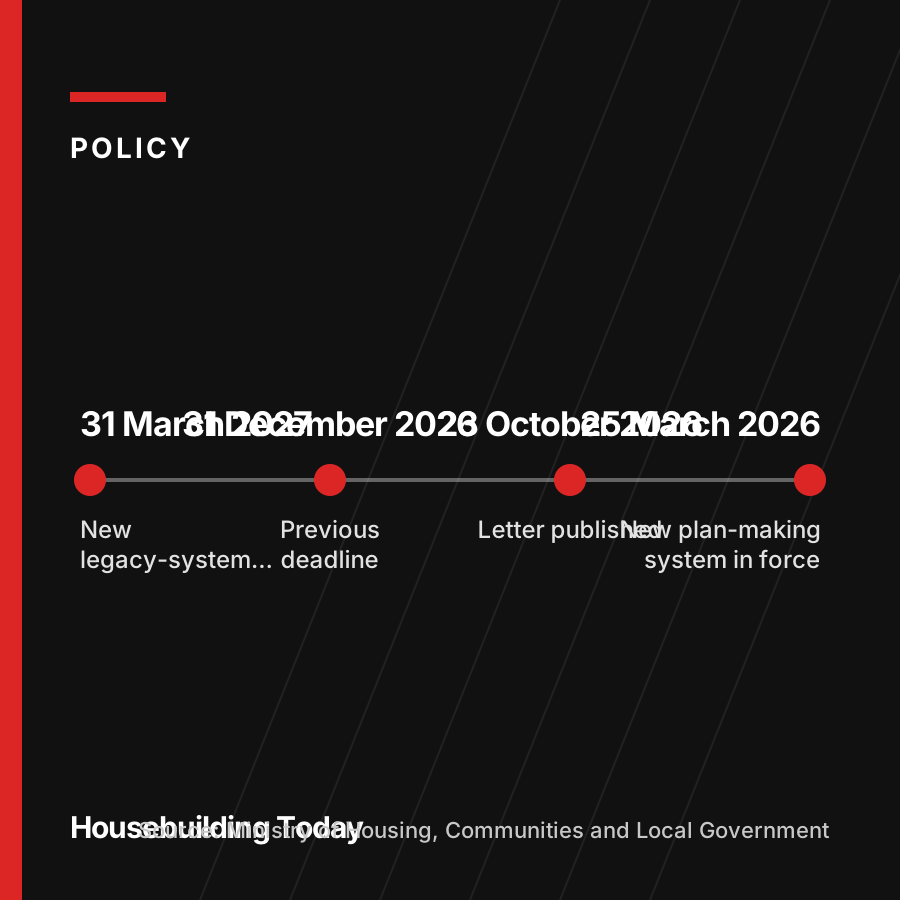
According to the Scottish Government's consultation page, a Stage 1 consultation on the form and approach of the standard was held in July 2024. Regulations laid in December 2024 introduced a requirement to submit design and construction stage compliance statements, with a coming-into-force date of 31 March 2028.
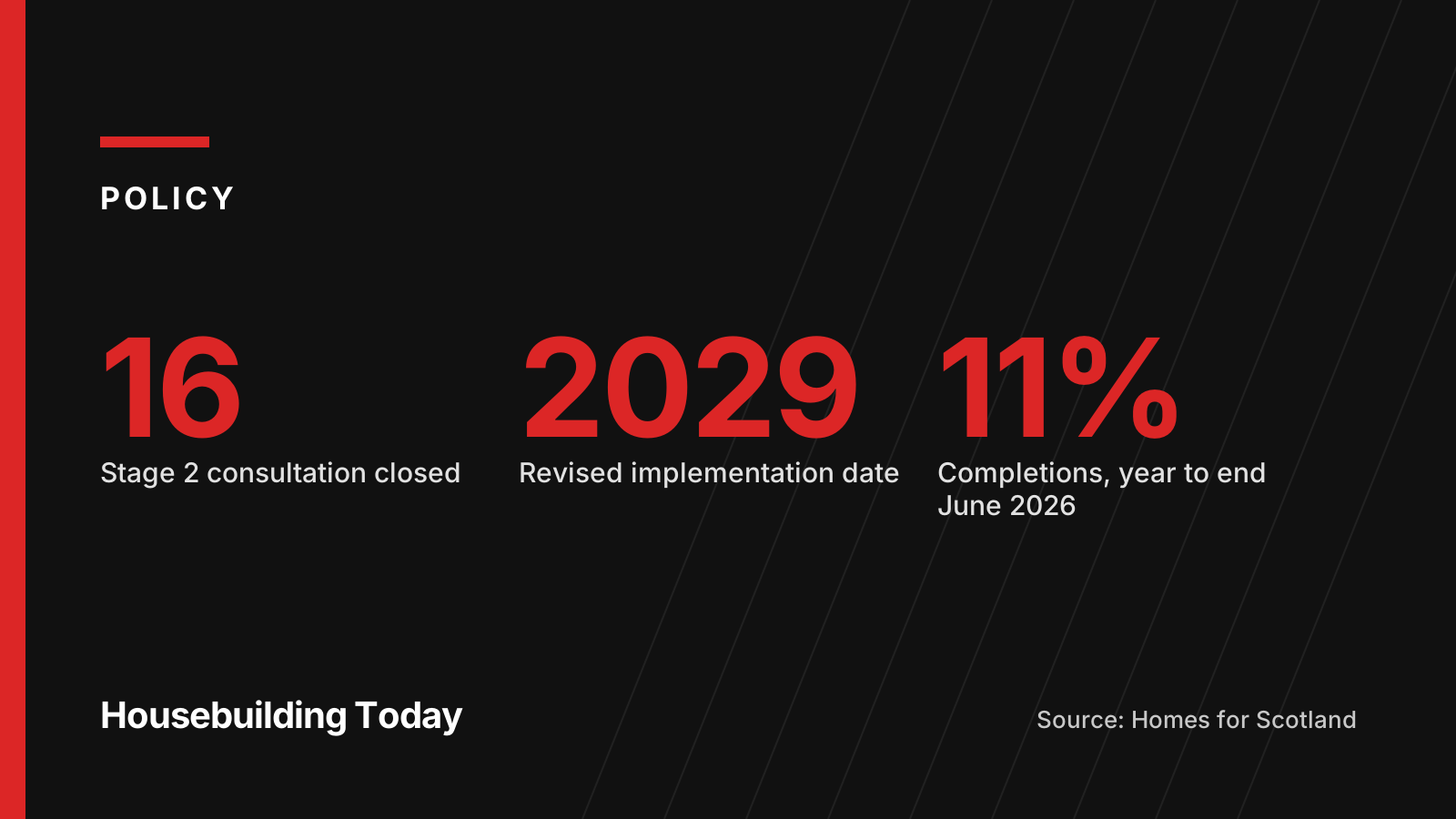
The Stage 2 consultation, which closed on 16 October 2026, asked among other things whether a modified version of PHPP should be recognised as an additional compliance tool for dwellings.
The Scottish Government said development of the Stage 2 proposals had taken longer than anticipated. It now aims to publish guidance and approved methodologies under standard 6.1 in autumn 2027, and said it will amend the implementation date in regulations to autumn 2029.
Housing supply figures
The Scottish Parliament agreed a motion supporting the declaration of a national housing emergency on 15 May 2024, and 14 local authorities have declared local housing emergencies, according to the parliament.
Scottish Government statistics for the year to end June 2026 show completions fell by 11%, or 2,123 fewer homes, and starts fell by 2%, or 272 fewer homes. Private sector completions were at their lowest level since 2018 and social sector completions at their lowest since 2007, the government said.
In the 2025-26 financial year, 17,268 new homes were completed and 14,955 started in Scotland. The social sector built 3,774 homes and started 3,937.
As of the end of June 2026, 36,518 homes had been delivered towards the government's 110,000 affordable homes target. Announcing Fraser of Allander Institute research commissioned by SFHA, Meade said the target was likely to fall short by about 35,000 homes unless rising building costs and capacity issues were addressed.
The Scottish Government said a consultation analysis report would be published some months after the consultation closed on 16 October 2026.
Sources
- Homes for Scotland (opens in a new tab) (accessed 2026-10-26)
- Scottish Government (Citizen Space) (opens in a new tab) (accessed 2026-10-26)
- Scottish Government (opens in a new tab) (accessed 2026-10-26)
- Scottish Government (opens in a new tab) (accessed 2026-10-26)
- Scottish Federation of Housing Associations (opens in a new tab) (accessed 2026-10-26)
- Scottish Parliament (opens in a new tab) (accessed 2026-10-26)
- Glasgow and West of Scotland Forum of Housing Associations (opens in a new tab) (accessed 2026-10-26)
This story was researched from the primary sources above and checked against them before publication. Spotted an error? Tell us and we will correct it promptly.